The word Ashtanga comes from Sanskrit and means “Eight Limbs,” referring to the eightfold path of yoga described in the Yoga Sutras of Patanjali.
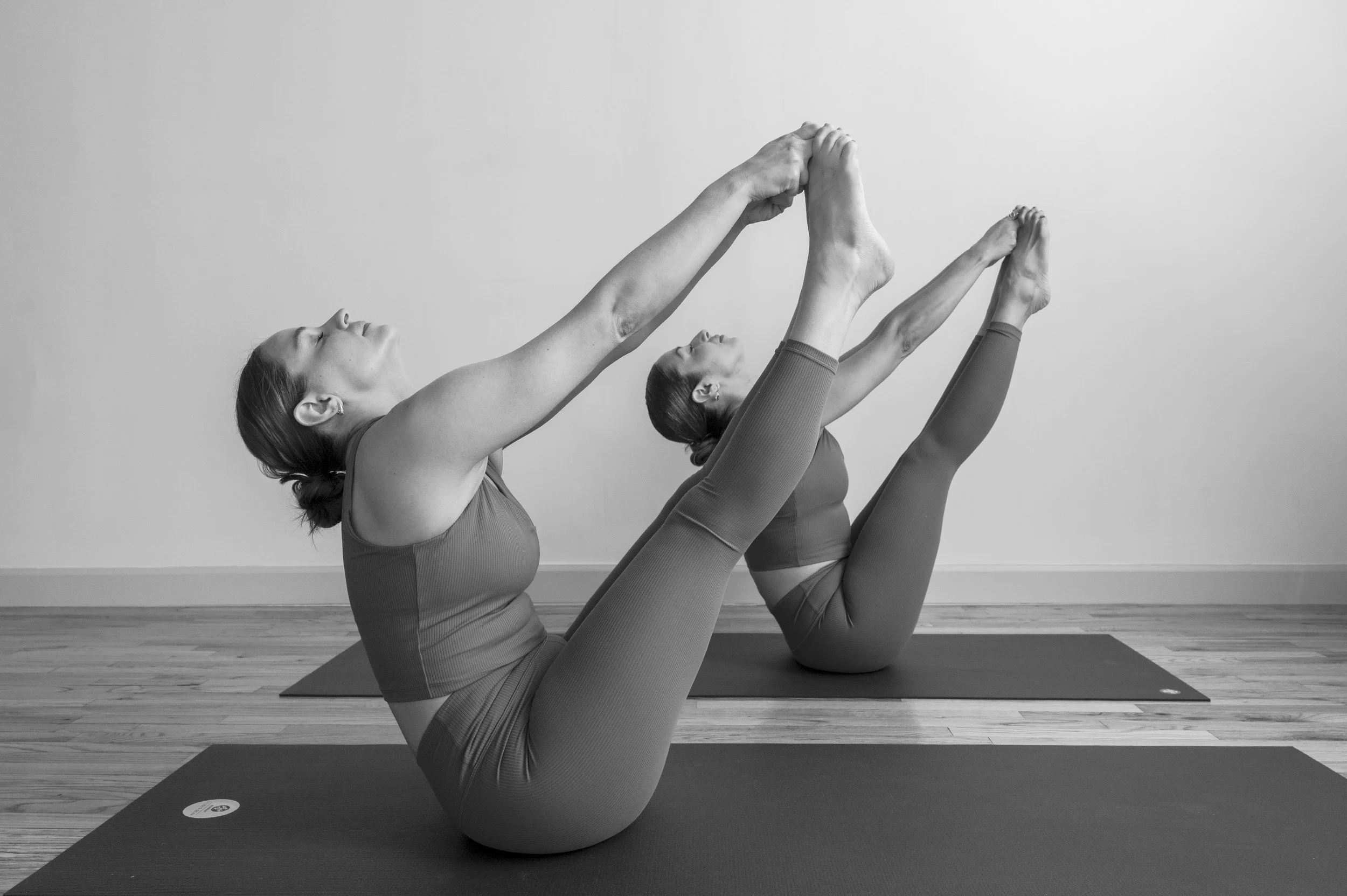
The physical practice (asana) of Ashtanga Yoga combines breath, movement, and focused attention in a structured and progressive dynamic practice. Ashtanga Yoga is a traditional system that builds strength, flexibility, discipline, and mental clarity. Over time, it becomes a moving meditation and a tool for self-study.
Originating in Mysore, India, Ashtanga is taught through lineage and emphasizes consistency, patience, and devotion to practice.
At its core, Ashtanga Yoga is not simply a physical practice. It is a complete system designed to cultivate balance in the body, steadiness in the mind, and awareness of the breath.
The foundation of Ashtanga Yoga comes from the teachings of Patañjali, who compiled the Yoga Sutras approximately two thousand years ago. In this text, yoga is described as an eight-limbed path toward self realization.
In the early 20th century, Tirumalai Krishnamacharya studied classical yoga texts in Varanasi and Tibet. Some accounts describe his training with a Himalayan teacher named Ramamohana Brahmachari.
Krishnamacharya later taught yoga at the Mysore Palace in India during the 1930s–1950s. Among his students was Sri K. Pattabhi Jois, who later developed and taught the Ashtanga Vinyasa Yoga system in Mysore until his passing in 2009.
After his passing, his grandson R. Sharath Jois became the foremost authority and lineage holder of Ashtanga Yoga. R. Sharath Jois studied and assisted his grandfather for many years, dedicating decades to the practice and teaching of Ashtanga Yoga. He was the only student known to have completed all six series of the system. Throughout his life he taught internationally and at his school, the Sharath Yoga Centre in Mysore, where he shared the practice with thousands of students from around the world.
R. Sharath Jois passed away on November 11, 2024 at the age of 53. His teachings continue through his family and students around the world, including his wife Shruti, daughter Shraddha, and son Sambav. The Sharath Yoga Centre in Mysore, India continues to welcome practitioners yearly.
The Ashtanga system is structured in six progressive series.
Primary Series, or Yoga Chikitsa (Yoga Therapy)
The primary series focuses on cleansing and aligning the body. In yogic philosophy, energy flows through pathways called nadis, carrying prana, or life force. Over time, blockages known as granthis can form. The primary series helps remove these blockages by strengthening the nervous system and aligning the body.
Intermediate Series, or Nadi Shodhana (Nerve Cleansing)
This series works more deeply on the nervous system and energetic channels of the body.
Advanced Series A–D, or Sthira Bhaga (Strength and Grace)
The advanced series require exceptional strength, flexibility, and control, and are typically developed after many years of practice.
Most practitioners spend many years developing the Primary Series before progressing further.
The foundation of Ashtanga Yoga practice is the Tristana Method, which means “three points of attention.” These three elements must be practiced together to create a balanced and meditative practice.
Breath
Breathing is always done through the nose with steady, even inhalations and exhalations. The breath regulates the nervous system, generates internal heat, and focuses the mind.
Dristi
Each posture has a specific gaze point, known as dristi, which helps cultivate concentration and prevent distraction.
Asana
Postures develop strength, flexibility, balance, and physical stability.
When breath, gaze, and posture are practiced together, they create a moving meditation in which body, breath, and mind become unified.
The word Ashtanga refers to the eight limbs of yoga, which outline a path for living with awareness and discipline.
1. Yama – Ethical Guidelines
Ahimsa, or Non-violence
Satya, or Truthfulness
Asteya, or Non-stealing
Brahmacharya, or Moderation
Aparigraha, or Non-grasping
2. Niyama – Personal Observances
Saucha, or Cleanliness
Santosha, or Contentment
Tapas, or Discipline
Svadhyaya, or Self-study
Ishvara Pranidhana, or Surrender to a higher principle
3. Asana — Physical Postures
4. Pranayama — Breath Control
5. Pratyahara — Withdrawal of the Senses
6. Dharana — Concentration
7. Dhyana — Meditation
8. Samadhi — Absorption or Enlightenment
The physical practice most people associate with yoga represents only one part of this larger system.